Wednesday, February 1, 2017
Words Matter
Wednesday, December 21, 2016
Its been a while
A few of my student found me blog the other day and asked why the last entry was so long ago. A very good questions. It inspired me to write a new post.
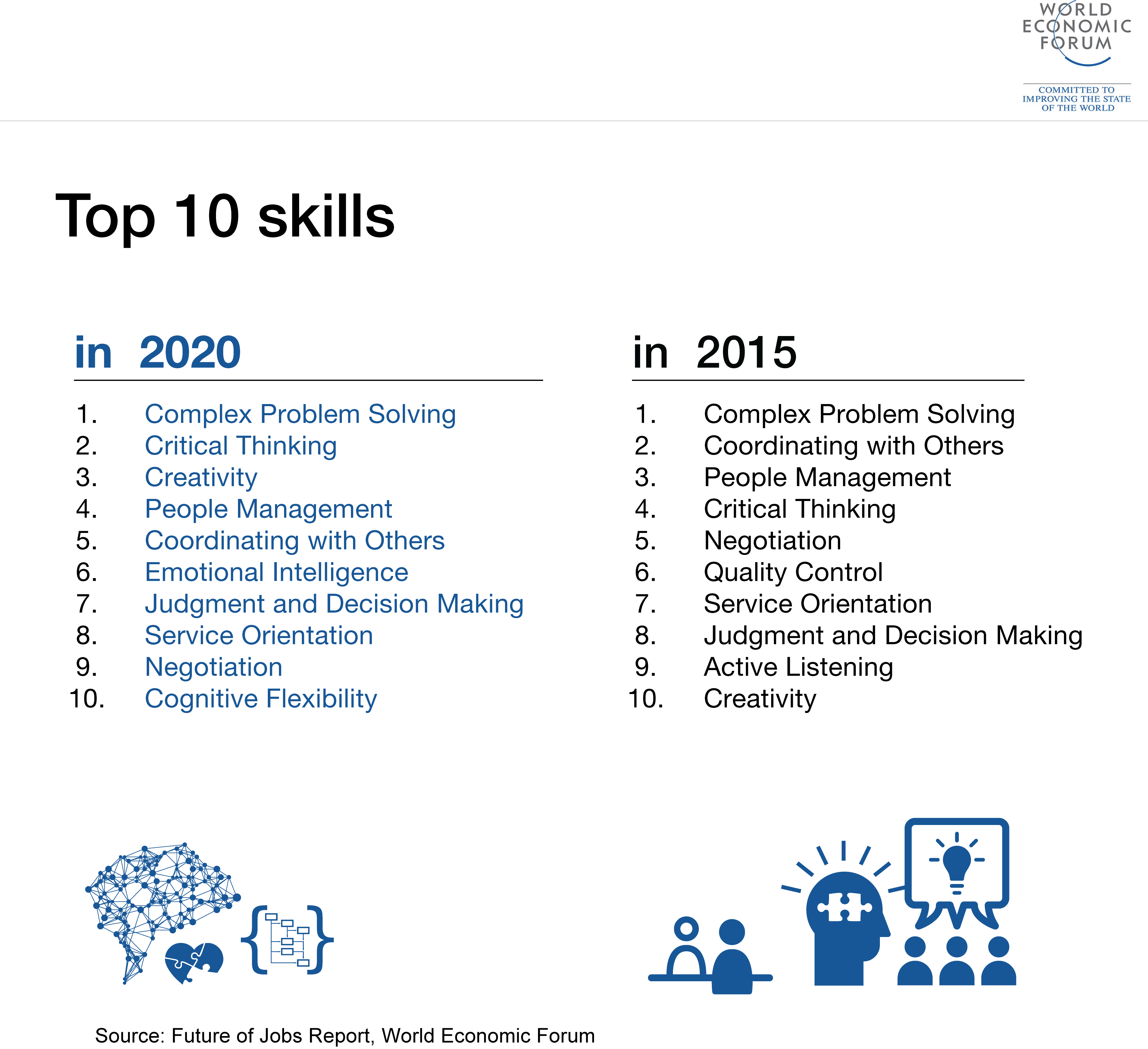
This list of skills got me thinking about what we teach our
students. As high school teachers we tend to be content driven, thinking our
content is the second most important (since we all know physics is the most
important). Well on this list of skills there is no content material, so how
does our teaching translate and prepare our students with these skills? And how
does their grade or success in our class or score on a standardized test
measure these skills?Saturday, September 5, 2009
Back in the Saddle
Being back in the without a lot of technology has given me the chance to implement some other changes. Between having our reading specialist as an office-mate for the past three years, Reading Apprenticeship training and this year taking the Performance Learning System (PLS) course Reading Across the Curriculum, I have embraced literacy and reading in the content area as a major focus in my classroom. In fact I plan on teaching the PLS class this spring. So with reading everyday in the classroom and a renewed and deliberate focus on metacognition I am off and running on a new school year. Much different than any of the past 20 plus years but one I am really excited about. After all being a classroom teacher is the most important job in the world.
Thursday, May 7, 2009
6 Secrets for Change
On Friday I heard two keynote addresses, the first from Paul Vallas , former Superintendent of Philadelphia, and Michael Fullan. I was in New Orleans, so Paul stopped by since he is the current Superintendent of the Recovery School District of New Orleans. He just gave us a brief overview of his work since Katrina. He himself said he was just a warm-up for Michael Fullan. Mr. Fullan presented his 6 secrets for change, 2-4 he called the core and 1 & 6 are the wrap-arounds. It was not the typical "keynote" but rather a mini-workshop which included many opportunities for meaningful discussion among our team.
His 6 secrets for change are:
- Love your employees
- Connect peers with purpose
- Capacity building prevails
- Learning is work
- Transparency rules
- Systems learn
Before he spoke about the secrets he presented 5 insights into change.
- The implementation dip is normal
- Behaviors change before beliefs
- The size and prettiness of the plan document is inversely propositional to the quality of action
- Shared vision and ownership is more an outcome of quality process than it is a predictor
- Feelings are more influential than thoughts
I had heard of the implementation dip before, but Fullan used a graphical business model (Herold & Fedor, 2008) that made made it a whole lot clearer in my mind. The basic idea is that after any change in made, it is normal that it will have a negative effect, but once the you get though the dip, the gains will realized. What Fullan presented is during the "recover phase" there will be much resistance and a push to abandon the change. To go along with that the leaders that made the change will be criticized and may even be targets of attack. This is were leaders must be strong and stay the course. The harder job is to make the slope of the graph be as steep as possible during the recovery phase. So be open with people about the implementation dip, and be prepared and willing to take the heat. If you have thoughtfully implemented change, that you know in your heart is good for students, then keep focused on the results that you want to achieve. But what is change and how do we manage it?
What do we need to change in education? Materials, behaviors and practices, and beliefs. Our district PATHS initiative requires all of these, the biggest being a shift by all people in the system to the belief that all children can graduate college ready. How do manage change? Through the use of change forces (almost like physics) which promote a bias to action in individuals. The difficulty comes in finding the change forces and making sure the bias to action is not to run the change agent out of town. In order to do this we need to manage change differently. Listen to the people who's behavior you want to change and become servants of that change. Demand and expect behaviors to change, in the hope that beliefs will follow, but it cannot be done with the accountability. In order for change to be effective a system of support and trust must be developed. Support must come in the form of administrators that are truly instructional leaders. At the district level that means putting the resources and building leaders in place and then letting them do their job and not micro-manage the process. As for building leaders ask for the resources, like coaching, time for peer visit and review, and building directed PD. As for the teachers, belief is not necessary (yet), but compliance and truly taking advantage of opportunities that are presented is an expectation. Teaching is hard work, and reform is even harder. The biggest step is to reflect on your practice and suggestions that you are given. In fact seek feedback from your peers, coaches or building administrators.
How do you manage or promote change? This is where Fullan's secrets come in. Secrets 2-5 he called the core so lets start. Secret 2: Connect peers with purpose. Change cannot be managed from the top down. While it may need to start at the top, it also has to percolate from the bottom up. This change force must be lead from the within and needs to be supported from above. Secret 3: Capacity building prevails. Change is difficult and causes fear. Fear prevents acting on knowledge. Non action makes change fail. So be non judgmental while change is occurring and help build the capacity. Giving non judgmental feedback take practice, it just not happen. Secret 4: Learning is the work. Before a new concept/change is put in place there must be a few things that are understood. It is non-negotiable and participation in not optional. It must be precise and well thought out, no random or vague ideas. It need to possess high yield strategies and strong instructional practices. But lastly it cannot kill innovation or creativity. Secret 5: Transparency rules. This is a true paradigm shift in education. No longer is it acceptable to close your door and keep your practice to yourself. This will only happen with a trusting environment. Transparency + Non judgementalism + Good help/coaching = Classroom improvement. Those are the core now the over arching. Secret 1: Love your employees. Seems so simple, but it is so easy for things we say and do to be heard or taken the wrong way. Why is this so important? If you do not feed the teachers they will eat the students. Secret 6: Systems learn. Leaders, teachers and learners leave a system, the culture stays. What is the legacy that you will leave in your classroom, school and district.
It was hard for me to sun-up two and half hours in such a short post. My advice, if you get a chance go hear Michael Fullan. I will close using what Michael asked as a rhetorical question. Where are you on the continuum of the nuances of the secrets to change?
- Blind love to Indifference
- Command & control to Fragmentation
- Judgemental to Liaise-fair
- Relentless consistency to Innovation/bad practice
- Aimless transparency to Privacy
- Dead certainty to Deer in the headlights
How do you make sure change happens for you
- Talk to people that are smarter than you, every day
- Make mistakes
- Make time to reflect
Monday, October 27, 2008
ESP of the Year
When did we become the enemy?
The target of scorn
The Hero unborn
The reason they fall
The brunt of it all
When did we become the enemy?
The purpose for unkind
The hidden victim of No Child left behind
Said to be a monument, but with no solution
Even called terrorist, deserving execution
When did we become the enemy?
Labeled failure, not in the running
High expectations without the funding
Training, experience, education specified
But to them, not highly qualified
When did we become the enemy?
Hard work, unappreciated labor
Their answer to funding, Tabor?
Taxes rising, money depleture
Easy blame, why not the teacher
When did we become the enemy?
Teacher Cadillac Insurance, be the foeWe are not the reason for the Health Care woe
Cut backs, eliminations, Education pollution
Their remedy, 65% solution
Created reasons they exercise
To justify, to privatize
When did we become the enemy?
So cooks, janitors, secretaries, securityThey're not important, a liability
Bus drivers, paras, they've cut the cost
They are always first to be layed off
When did we become the enemy?
Have they dismissed the history of this nationEducation is rooted in it's very foundation
Have they not noticed that we with pleasure
Nurture and mold our future's treasure
Have they forgotten, because of our dedication
They received an education
When did we become the enemy?
Well we're not taking this lying downIn fact, we as educators are going to turn this around
And whoever they are had better take note
The greatest power we have is the right to vote
Now just watch our educators organize
Because despite what they might think, we are highly qualified
An enemy maybe in their eyes
But a change is coming in their lives and when history is made, and education once again becomes this country's necessary feature, they had better think twice before attacking our students, retired, Higher Ed, ESP and the teacher.
Do not forget to vote, and when you pull the lever think about the candidate, local, state or national, that is a friend of education, because if we do not help ourselves politically who will?
Sunday, August 31, 2008
Opening Day
- Someone made you come today.
- You have the goal to graduate high school.
- You want to prepare yourself for your future.
- Show up and be on time every day, all 720 of them.
- Treat everyone you meet, teachers, staff and fellow students, the way you would like to be treated.
- You have to do your work, the only one on in the list that is actually difficult.
Monday, July 7, 2008
One for Us
At the RA any member can submit a New Business Item (NBI) that they would like to see the NEA take action on. One such item was proposed by a woman from New Jersey. NBI 67 "That NEA recommends the banning of all student personal electronic devices, especially cellphones, from the classroom". Well I immediately went into tech defender mode. I went a spoke to the woman to see if I could offer a friendly amendment to her NBI, that would remove the word banning. Her response was that they were already going to modify it to except education or medical uses (that would be just about everything in my view). Seeing she was not going to budge, I went to my delegation from PA and asked them to support my amending the motion to read "That NEA recommends the teaching of appropriate use of all student personal electronic devices, especially cellphones". The PA delegation agreed to let me try to amend the motion and speak on their behalf.
The time came for NBI 67 to be discussed and voted on. The maker of the motion asked to modify the motion to add the part about educational and medical, and then got a chance to give her rational. There were a few questions ask, but then came my turn. The Chair, President Reg Weaver said "Microphone 15 Lee Speers seeking to amend, mike 15". A spotlight comes on the red light on podium 15 turns on and there is my face on 4 big screens, and several smaller ones, in front of almost 10,000 people. "Yes President Weaver I would like to amend NBI 67 with the language I submitted." President Weaver asked for my amendment to be placed on the screen. For the first time the delegates at the NEA-RA see the proposal, the room grows eerily quiet and then a slight murmur. The leadership from all of the state delegations starts talking to see if they will recommend supporting the change. President Weaver asked the maker if she would accept the modification (I know what her answer is). After she says no, it is now my opportunity to speak to my amendment. Here is the text of my remarks:
A couple quick facts about cell phone use. There are currently 3.3 billion active cell phones world wide, that is one cell phone for every 2 people on the planet. There are currently 30 plus countries in the world that have 100% saturation (one cell phone for every man, woman and child), the US is not one of them. Presently in the US 16% of all households have only cell phone service and that number is growing rapidly. In the US there are more active cell phones than home computers. What does all this mean, there is no way to enforce a cell phone ban. So what is the alternative?
Do and will students use cell phones improperly? Sure they do, but they use computers, pens, pencils and even crayons improperly too, and do we ban them? No instead we do what good educators do when students misbehave. We teach them how to use the equipment properly. We need to do the same thing with technology, not, run from it, fear it or ban it, but help our students understand it and use it properly. The International Society for Technology in Education ISTE has developed National Education Technology Standards NETS. These standards have not only been developed for students, but also teachers, administrators and technology leaders. All of these standards address good digital citizenship when using technology. And who better to teach students these standards than US, the members of the NEA? Please do not stick you head in the sand and support this amendment to NBI 67.
Sunday, June 29, 2008
NECC 2008 First Day Recap
- A good prompt is worth 1,000 words. With a good prompt the students should be motivated to produce a high quality product. There does not have to be a lot of instruction "words" to limit the students creative juices used in producing their product.
- Monumental vs. Substantial. Assignment for students should not be monumental. Although students can make any task monumental by procrastinating. Assignment should instead be substantial and meaningful. Easier said than done, but if the task is substantial the product will be vastly better and in fact easier and more rewarding to grade. Timed saved, so put the time in before or after, your choice, make the one that is better for the student. This was also referred to as Craft or Crap.
- The last is a quick idea for a project, take and run. Give two groups of students the same video clips. say from a presidential candidate. Have on group produce a pro candidate add and the other a negative candidate add. Kids will real learning about propaganda and persuasion, oh and they just happen to use technology to due it.
Friday, May 23, 2008
The next step in the Movement
Students in S. Bronx Refuse to Take Test
Almost all of the eighth-graders at South Bronx's Intermediate School 318 chose to hand in blank exams at the end of a three-hour social studies practice test. Refusing to take the test, even a practice test, may mean dismissal for the student's teacher, whom some authorities blame for inciting the boycott, though the students claim otherwise.
Writer and former teacher Dan Brown says the reason we haven't seen more protests like this one is be cause "students have been intellectually and spiritually bludgeoned into submission."
Do you think this sort of civil disobedience is effective? Are kids better served to take the test or walk out in protest?
This is the next step in the movement. See my post from April 25. Steve Dembo took my original post a little farther and even wrote some words. Check his post out here. I am for students organizing themselves and taking a stand on an issue that directly effects them and their right to a quality education. Way to go guys!
Sunday, May 18, 2008
30 Things Good Teachers do
Okay I read a post on LifeHack "50 things that successful people do". The post took all the self-help books and boiled them down to the 50 things you need to do to be successful. Well I read them over and took a look at them from and educational perspective. Some just did not fit and many needed to be tweaked. So here is my list of 30 things good teachers do.
Habits of good teachers….
- They look for and find opportunities where others see nothing.
- They find a lesson while others only see a problem and they focus on solutions.
- They consciously and methodically create success for their students, while others hope students will find success.
- They ask the right questions - the ones which put them in a productive, creative, positive mindset and emotional state.
- They rarely complain (waste of energy). All complaining does is put the complainer in a negative and unproductive state.
- They don’t blame (parents, students?). They take complete responsibility for their actions and outcomes (or lack thereof) of their students.
- They are busy, productive and proactive. While most are laying on the couch, or in the teacher's lounge, they are out there getting the job done.
- They align themselves with like-minded people. They understand the importance of being part of a team. They create win-win relationships.
- They are ambitious; they want amazing for themselves and their students- and why shouldn’t they?
- They have clarity and certainty about what they want (and don’t want) for their students .
- They innovate rather than imitate.
- They are life-long learners. They constantly work at educating themselves, either formally (academically), informally (watching, listening, asking, reading, student of life) or experientially (doing, trying)… or all three.
- They are glass half full people - while still being practical and down-to-earth. They have an ability to find the good.
- They consistently do what they need to do for their students, irrespective of how they are feeling on a given day. They don’t spend their life stopping and starting.
- They deal with problems and challenges quickly and effectively, they don’t put their head in the sand. They face their challenges and use them to improve themselves.
- While many people are reactive, they are proactive. They take action before they have to.
- They are good communicators and they consciously work at it, with student, parents, administrators and peers.
- Their desire to be exceptional means that they typically do things that most won’t. They are willing to take risk and realize that you learn as much if not more from failure.
- They do what is best for their students and that is the first question they ask.
- They understand the importance of discipline and self-control. They are strong. They are happy to take the road less travelled.
- They are generous and kind. They take pleasure in helping all students achieve.
- They are humble and they are happy to admit mistakes and to apologise. They are confident in their ability, but not arrogant. They are happy to learn from others. They are happy to make others look good rather than seek their own personal glory.
- They are adaptable and embrace change, while the majority are creatures of comfort and habit. They are comfortable with, and embrace, the new and the unfamiliar.
- They are resilient. When most would throw in the towel, they’re just warming up.
- They are open to, and more likely to act upon, feedback, from administrators, peers and students.
- They don’t invest time or emotional energy into things which they have no control of.
- They are happy to swim against the tide, to do what most won’t. They are not people pleasers and they don’t need constant approval.
- They don’t rationalise failure. While many are talking about the troubles of their students, they are finding a way to help them succeed despite all their challenges.
- They are more interested in effective than they are in easy. While the majority look for the quickest, easiest way (the shortcut), they look for the course of action which will produce the best results for their students over the long term.
- They practice what they preach. They don’t talk about the theory, they live the reality.
I am sure that many teachers will read this list and say, hey that is me. Others will say that I must be nuts, no teacher can be like that (I not sure many of those will find this post). Do I care or even want to know? What do you think?
Thursday, May 8, 2008
Another Voice Joins the Chorus
Tuesday, May 6, 2008
Cell Phones Again
Return of the Cellphones-in-Class Question
Today’s mailbag brings a question that was on every teacher’s lips a few years ago. I haven’t heard much talk about it recently. Is that because teachers have solved this problem on their own? If so, I’d like to hear your suggestions…
Dear David: I’m a high school teacher. Like all high schools, we are dealing with a problem that sucks time, energy, and resources like a black hole: cellphones. We waged a similar battle a few years back with iPods, and although stakes seem much higher now, the fundamental argument is the same. The argument is:
1] cellphones are a distraction
2] cellphones present a potential liability in terms of cheating on tests
3] cellphones are a distraction
My position is that we’re fighting the wrong fight, and fighting a fight no one will win. Telling teenagers that they cannot have a cellphone on their person, or worse, telling them that they can carry it but they cannot use it, is like banning cloudy days. It’s an admirable suggestion, but totally ludicrous. If I’m gauging the pace of progress correctly, by the time my current students exit college, the iPhone will be one of five devices that offer voice, text, e-mail, video chat, and Web access. Banning them is, in my opinion, ill considered at best.
I truly feel we should be incorporating their capabilities into the curriculum when possible, and teaching etiquette and personal responsibility in their use—because if the college class I teach is any example, they don’t got none. It’s so disheartening to look around during a lecture and see the soft glow of the screens while my students text away. I want to say it’s insulting, but it’s not personal — not in the least. It’s just the way it is.
So I’m asking for some insight on how to sell this to an administration that is overwhelmed with a hundred more important things, and to a school board that feels that two $500 computers are twice as good as one $1,000 machine. What’s the answer?
So my answer is, let them eat cake, oh I mean I have to agree teach the student responsible use of technology. There is no way to stop them from using and having them so teach them how to use them properly. With so much to teach students and so little time why should we as educators waste some of that time on this issue.
It seems like Steve Dembo had the same idea as I did and posted Dave's letter on his blog as well. What makes this even more ironic is that Steve, Dave and I were all together at PETE&C this year. Steve and Dave as keynote speakers and little old me just there to hear them. But we all had the same idea of venting on the time wasted on this issue.
Friday, April 25, 2008
Standing up
I think most teachers will agree that a child is more than a test score, but how many of us would be will to put ourselves in that kind of peril just to show it. Maybe if we all did the effects of NCLB would not have been as devastating.
Wednesday, April 23, 2008
What a Day
Tuesday, April 15, 2008
Never put Science Teachers in a Room Together
Saturday, April 12, 2008
The $50 SMARTBOARD
What makes this great is that Mr. Lee gives the software and instruction for free. With the use of YouTube for advertising his interactive whiteboard software has been downloaded thousands of times and his "invention" is being use all over the world as a cheap reliable substitute for equipment that is financially out of reach for many districts. The only problem is going to be getting the Wii remote away from my son.
Saturday, March 29, 2008
The best 18 minutes I have spent in a long time
Clifford Stoll: 18 minutes with an agile mind
Tuesday, March 25, 2008
Einstein and the Other Spears
Spears trumps Stephen Hawking. Worse, nearly half of Americans couldn’t name Einstein, Hawking, or any other current scientist as a science role model for today’s youth, according to a new study on “The State of Science in America,” by Chicago’s Museum of Science and Industry, conducted by Harris Interactive. The survey reveals for the first time what average Americans think about science, science education, and our nation’s leadership in science. Most (70 percent) believe America is not the world leader in science, and only 35 percent think the U.S. will be the world leader in science in the next 20 years. Among those adults pessimistic about America’s prospects in science, 79 percent agree science is not receiving the attention it deserves in our nation’s schools. The survey found strong support for a range of ways to improve science education, including more support for teachers, more time spent learning science, increasing parental involvement and finding more ways to teach kids about science. You can read more about the survey at www.stateofscience.org.
So I went and read the entire survey and here what I think:
- Scientists are not seen as role models, well I am not use they ever were. When only 4% of adults could name a living scientist why would kids have them as role models.
- Adults are not impressed with how seriously America is taking science education. Well we are not taking it seriously. Science has been pushed out because it is not tested for AYP, but next year....
- Adults think science education is falling short and deserves increased funding and attention. Then ask if their taxes should go up to provide this funding and see what the answer is. Do more just don't cost me more. How about this idea, send a little bit of money on early science education and reap the benefits in the years to come.
- The idea for improving science education contained no earth shattering or revolutionary ideas, just things we know would help.
Monday, March 24, 2008
Yah Mon
Sunday, March 9, 2008
Every Teacher Needs to Watch This
I forget where I saw this, it may have been on a Twitter. Anyway I watched it on YouTube, but since it is blocked at school I used Zamzar to convert it. But how the video got on my blog is not what this post is about. It's about the content of the video. If any teacher watches this and it does not impact the way they teach they are either teacher of the year or need to think about retiring. I think of my own son in kindergarten the class of 2020. What will he do when he grows up. It very may well be a job that has not even been thought of yet, and will he be prepared by the educators he encounters during the next 12 years? I hope so. After watching this I will redouble my efforts to help teachers that wants to learn and incorporate technology into their practice so they can help students like my son.